.png&w=828&q=75)
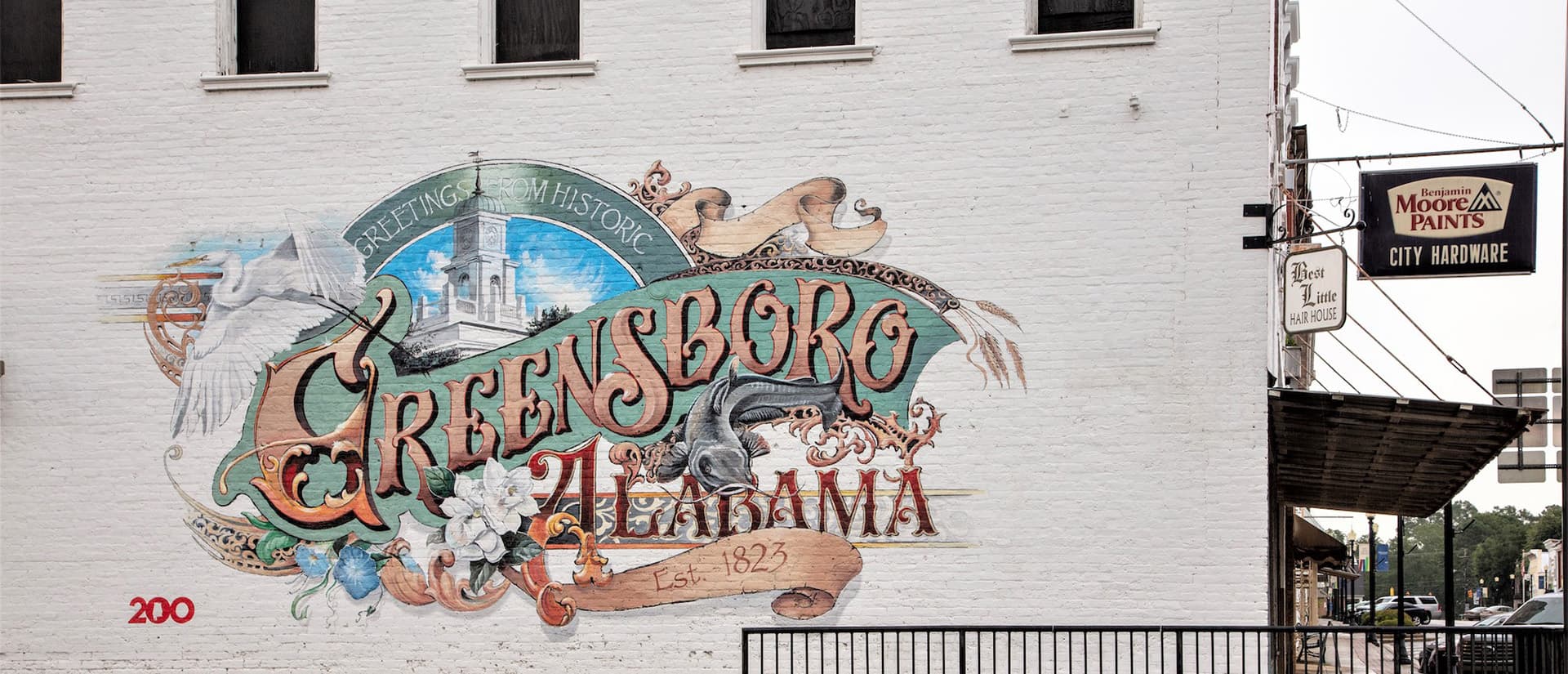
WHO'S COMING TO GREENSBORO?
Revival of an historic town
Young professionals in casual dress are a common sight on the streets of Greensboro and Hale County. Unlike many small towns in the rural south, Greensboro is home to significant non-profit organizations aiming to revitalize the area and offer better lives for the people who live here.
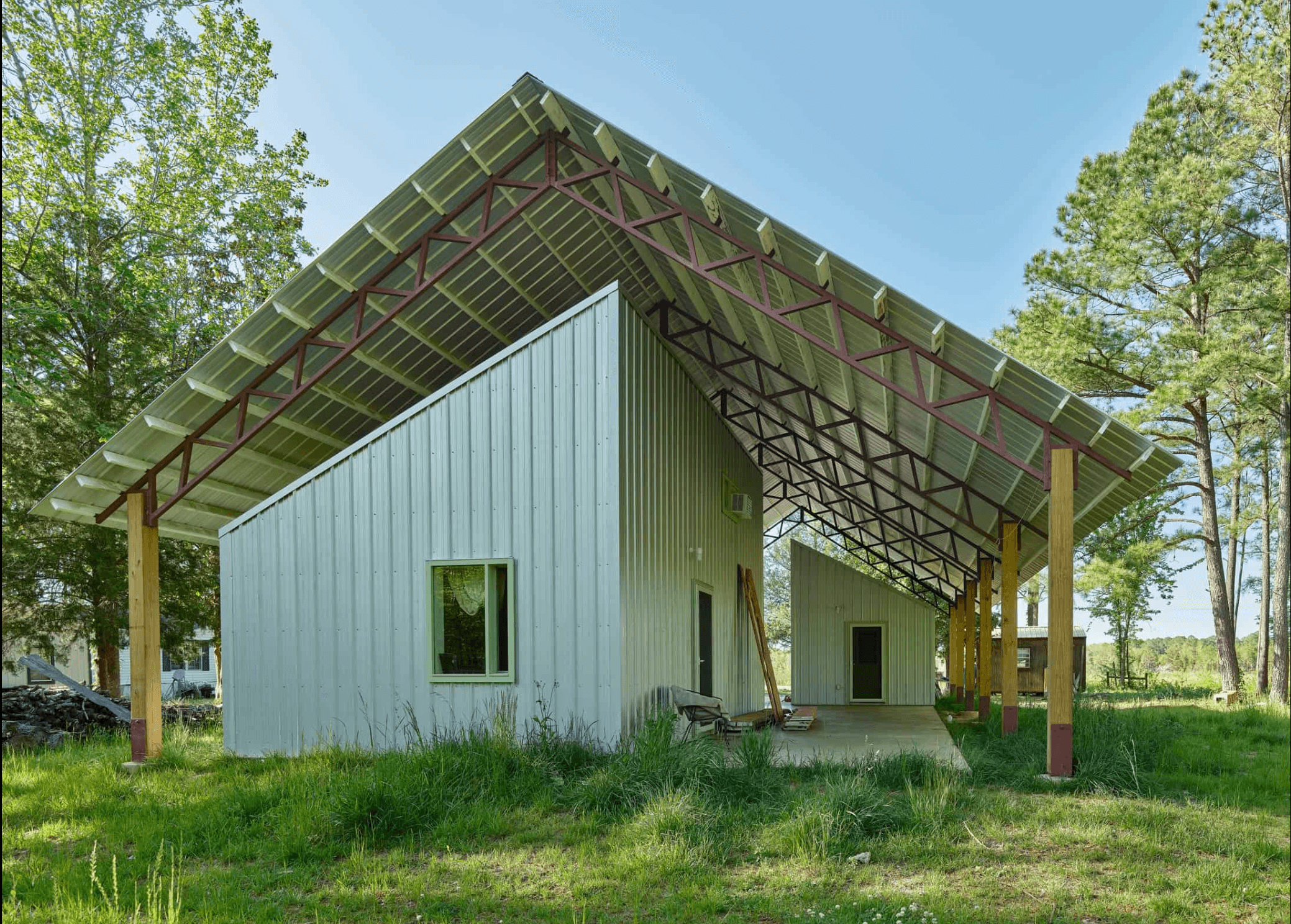
Rural Studio
The first was Auburn University’s long-standing program for creating better living and working buildings. Arresting architecture with unusual building materials are tangible results of the Rural Studio’s work, easily recognized as visitors explore the Black Belt.
Auburn University’s Rural Studio brings architecture professionals and their students to Greensboro and Hale County. Every year some four dozen students move here. The building projects teach housing access, affordability, small-scale farming and high-quality architecture that builds equity.
The Rural Studio says students come to conduct “research on sustainable, healthful rural living through both housing and the vital systems we foster to ensure our communities thrive.”
Project Horseshoe Farm
Another long-lived project on Main Street restored the historic Greensboro Hotel into a thriving living space for fellows at Project Horseshoe Farm. This popular gap year for students preparing for medical school brings two dozen top college graduates to Greensboro and Perry County for a fellowship of service learning. They partner with seniors, children and others providing rural community support as they prepare to become medical doctors.
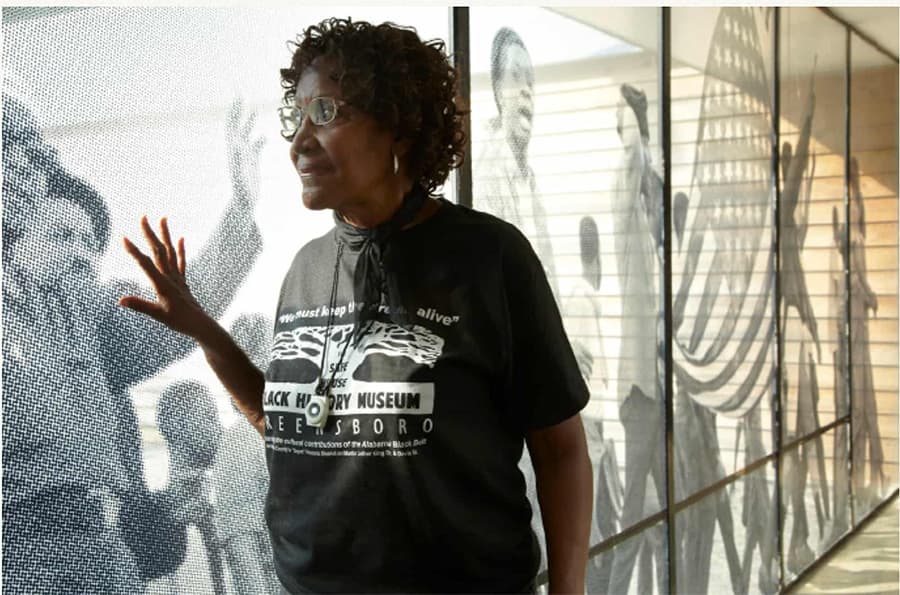
The Safe House Museum
A critical piece of civil rights history sits on a quiet Greensboro street near the train depot. It is the former shotgun house where the Rev. Dr. Martin Luther King Jr. hid from enemies in the Ku Klux Klan on March 21, 1968. He was sheltered by a close friend of the King family, Mrs. Theresa Burroughs. Two weeks after his time in Greensboro, he made his fatal trip to Memphis, Tennessee where he was assassinated. The modest house is paired with another shotgun house and repurposed into a museum. Together, the two houses support the museum Mrs. Burroughs founded in 2002. While many civil rights spaces are filled with the drama of the Montgomery Bus Boycott and the Selma March, one guiding idea here is showing the very local struggle for racial equality in the small towns of the south. Auburn's Rural Studio restored the exteriors of the houses to their original condition and created a gallery space for art and mass media.