.png&w=828&q=75)
About Us
Restoring a sense of place
This remarkable house is a living reminder of the importance a specific place provides to people’s lives. All the family members who grew up here entered lives of public service. Evelyn Anderson’s life is a well-known inspiration for joy in teaching. Two of her brothers followed their father into medical service as doctors.
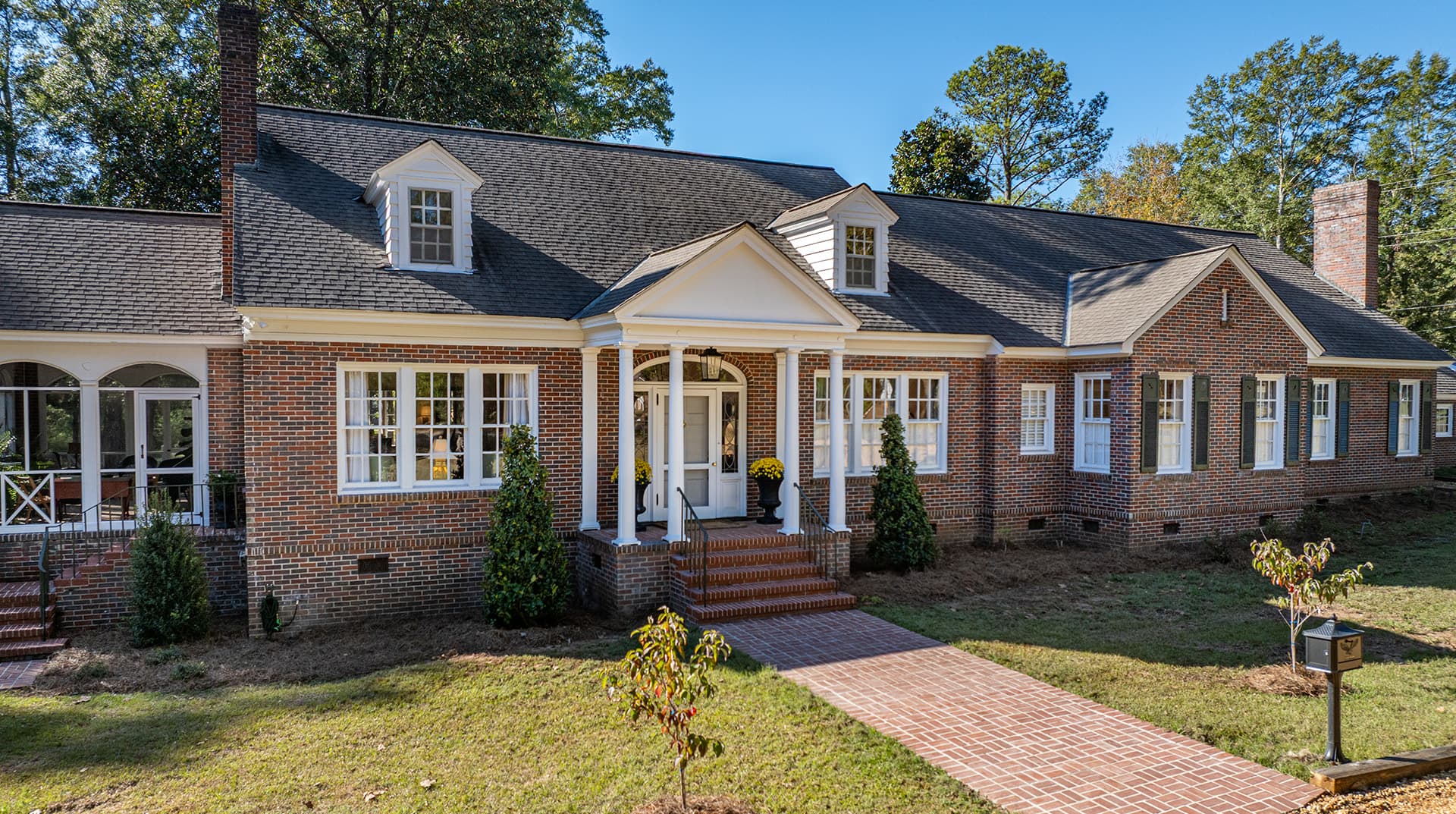
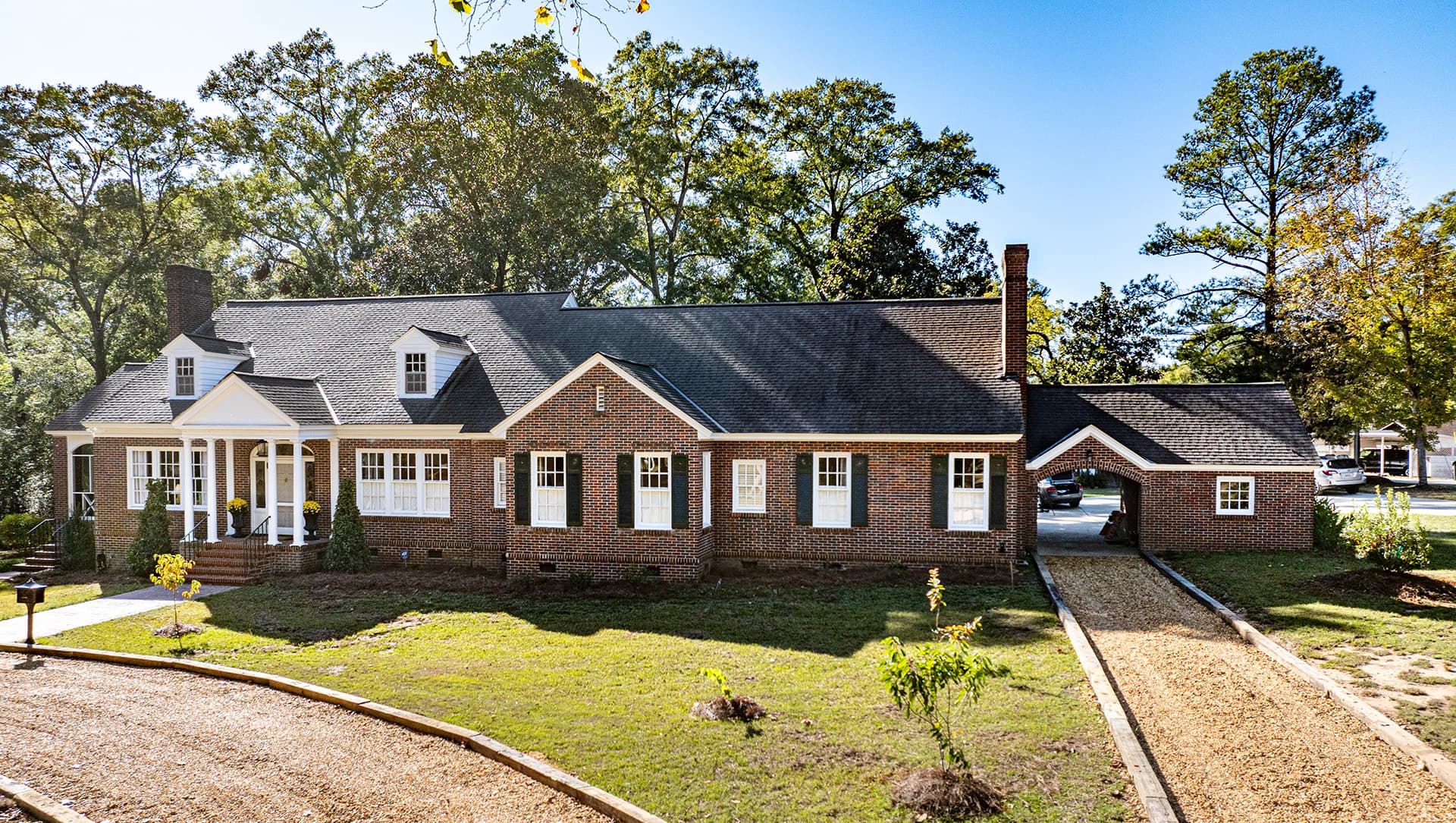
Built as a physician’s home in 1937, our B&B’s classical architecture sits in a comfortable balance with its setting of oaks and magnolias.
The years after the Anderson family grew up were kind to the house. All around Greensboro, Alabama, new projects and young families are rebuilding the life that flourished here during the 20th century. Its new owners purchased the property in 2023.
Air conditioning, Wi-Fi, updated wiring, and ensuite bathrooms all improve the home's comfort. Using paint, polish and 21st-century technology, the house returned to a prominent place in the life of the broader Black Belt.

Each guest room features a painting by Steve Penley. The well-known Georgia portraitist created flower images in bold strokes on vibrant backgrounds. Visitors looking for contemporary art in the American South can take a Steve Penley tour starting with Evelyn Bed & Breakfast and continuing with the Quilts of Gee’s Bend, 60 miles south of Greensboro in Boykin, Alabama.

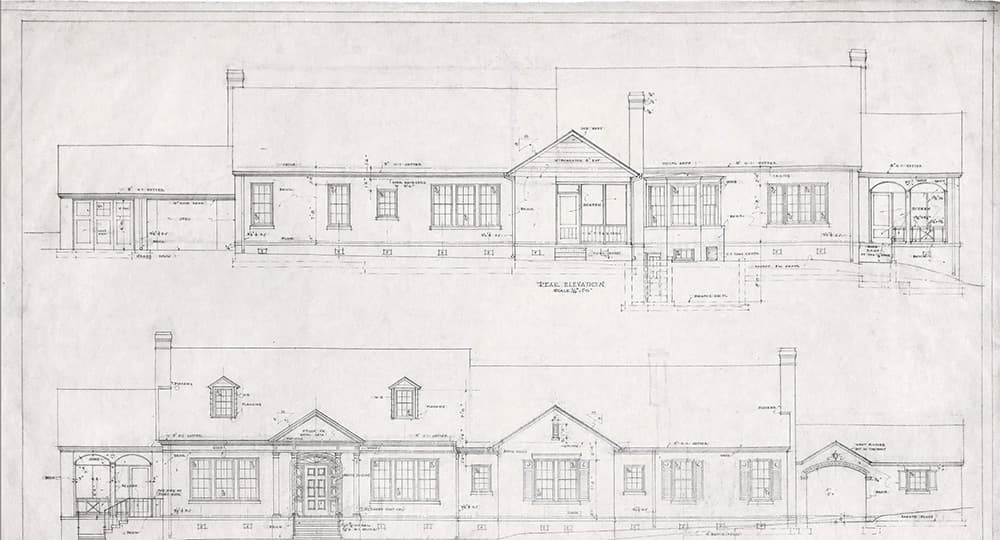
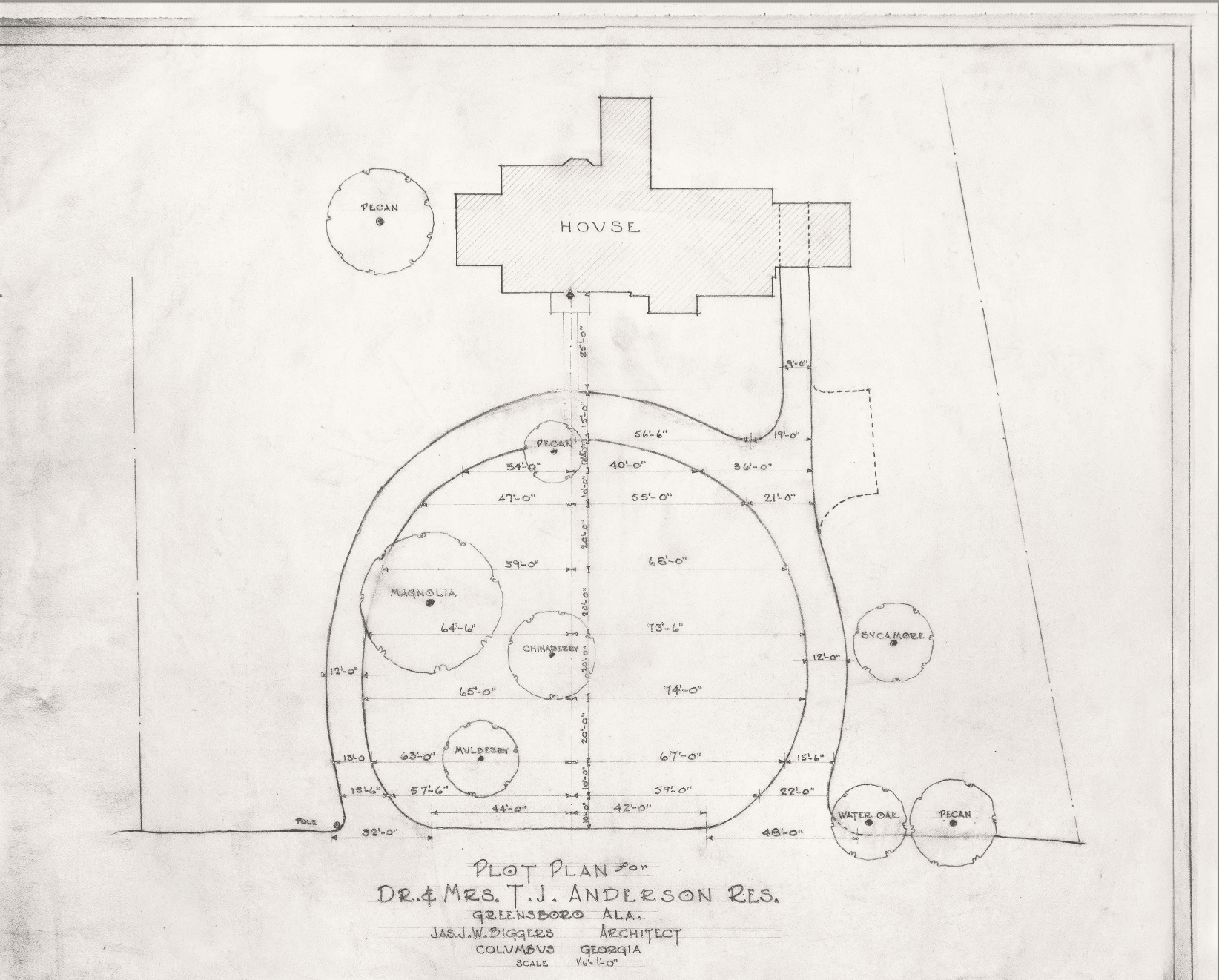
The architect who designed the house created a landscape palette of classical order to match the house. Columbus, Georgia architect Jas. J.W. Biggers encouraged gardeners to “avoid shrubs with pink blossoms which might clash with the (red) brickwork.” He specified a wide range of trees and plants, using then-popular choices brought to the US from Asia and Europe. Listed first on the architectural drawings is Japanese Privet. Landscapers today call privet an invasive threat to native plants. A photo from the last century shows green foundation plantings lining the front of the home. In restoring the historic plans, most of the two dozen choices of species Mr. Biggers listed are no longer alive on the grounds of the property.
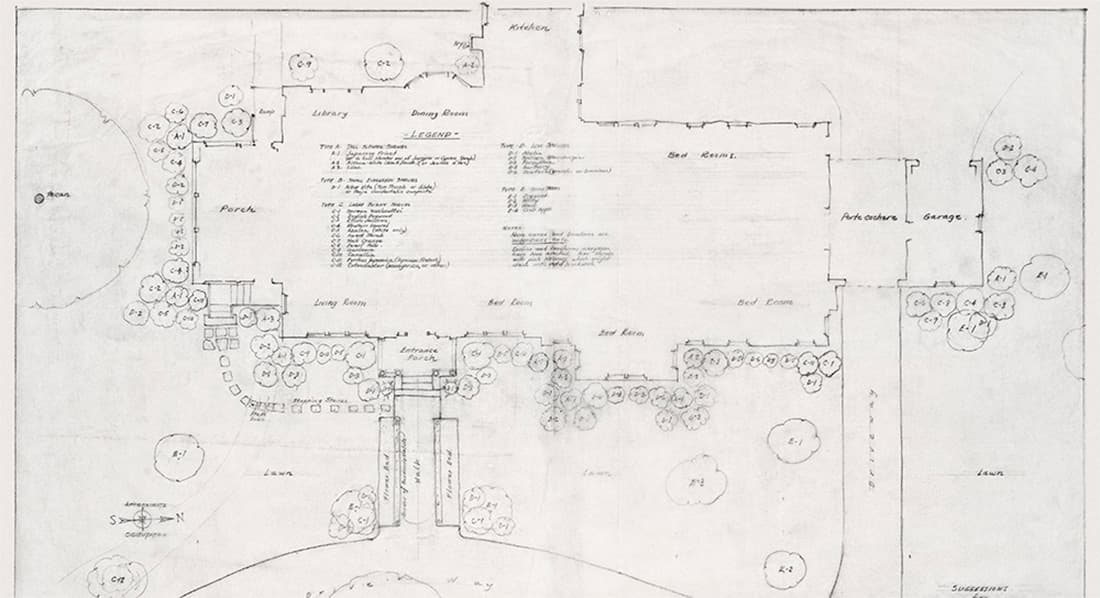
Replacing the lost shrubs and trees included a deep search for plants of similar shape and size that would thrive in Black Belt soil. The new owners took the advice of University of Delaware ecologist and best-selling author Doug Tallamy. His work promoting habitat restoration and biodiversity inspired choices favoring insect and bird life as well as human enjoyment.
First, where the landscape architect in 1937 suggested Japanese Privet, two large American hollies (Ilex ‘Homefire’) flank the front door. Their bright red berries suit human and avian visitors to Evelyn Bed and Breakfast.
Dr. Tallamy recommended oaks as the premier tree for supporting the greatest number of species. He calls native oaks the most powerful plant there is. A sapling Post oak (Quercus stellata) is now growing near the driveway, with half a dozen full-grown Willow oaks (Quercus phellos) in the lawn.
A serviceberry ((Amelanchier x grandiflora) and a sourwood tree (Oxydendrum arboreum) are placed near a redbud (Cersis canadensis), offering three-season color and food for insects and birds.
Along the front of the house, a mixed planting of Fothergilla (Fothergilla 'Mount Airy'), Oak Leaf Hydrangea (Hydrangea quercifolia) and Virginia sweetspire (Itea virginica) are living up to the original landscape architect’s request to avoid pink blooms that would interfere with the red brick.
Sweet-scented blooms drove the choices for plantings near the porch. Sitting on wicker chairs and cushions, visitors will enjoy the fragrance of a hard to find Devilwood, a native tea olive (Osmanthus americanus 'Absinthe'). It is growing near a fringetree (Chionanthus virginicus).
The original oaks, pecans and magnolias still thriving on the four acre lawn do have some company from beloved plants from other parts of the world. Some plants long established in Alabama from Europe and Asia include gardenias and jasmine vines. Many Greensboro neighbors recall camellias as a pride of the Anderson family.
Restoration with a twist is the new story of a home approaching its centenary with grace.
Other plants and small trees on the lawn include:
American hornbeam (Carpinus caroliniana 'Clarynette')
Wax myrtle (Myrica cerifera)
Swamp titi (Cyrilla racemiflora ‘Mississippi Queen’ )
Horsesugar (Symplocos tinctoria )
Mountain Gordlinia (Gordlinia grandiflora 'Sweet Tea')
Cornus florida 'Comco No. 1' - Cherokee Brave Dogwood
Ilex opaca
Yaupon Holly (Ilex vomitoria)
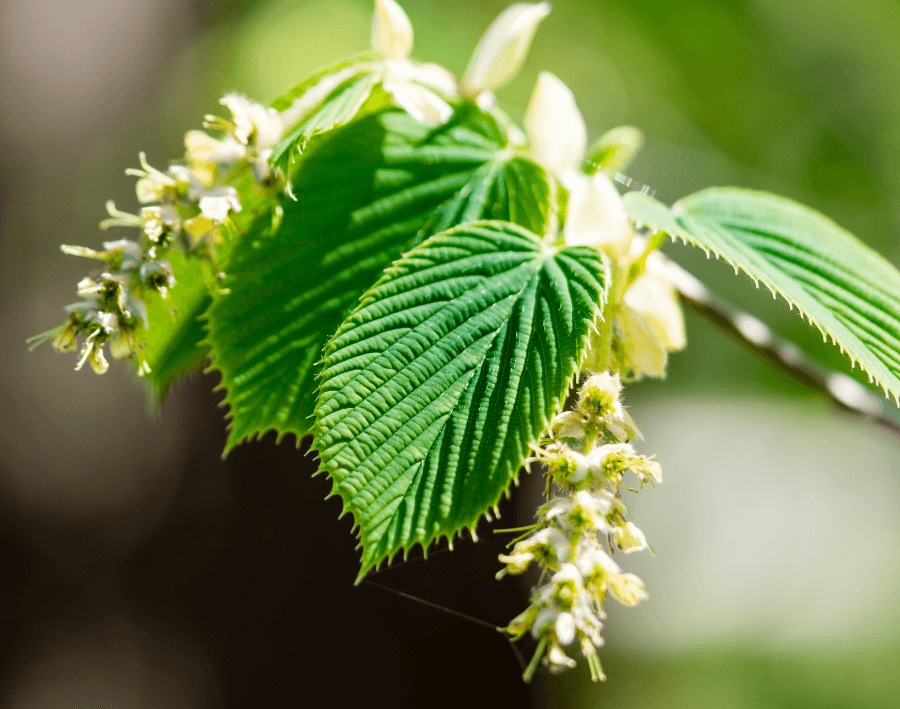
American hornbeam
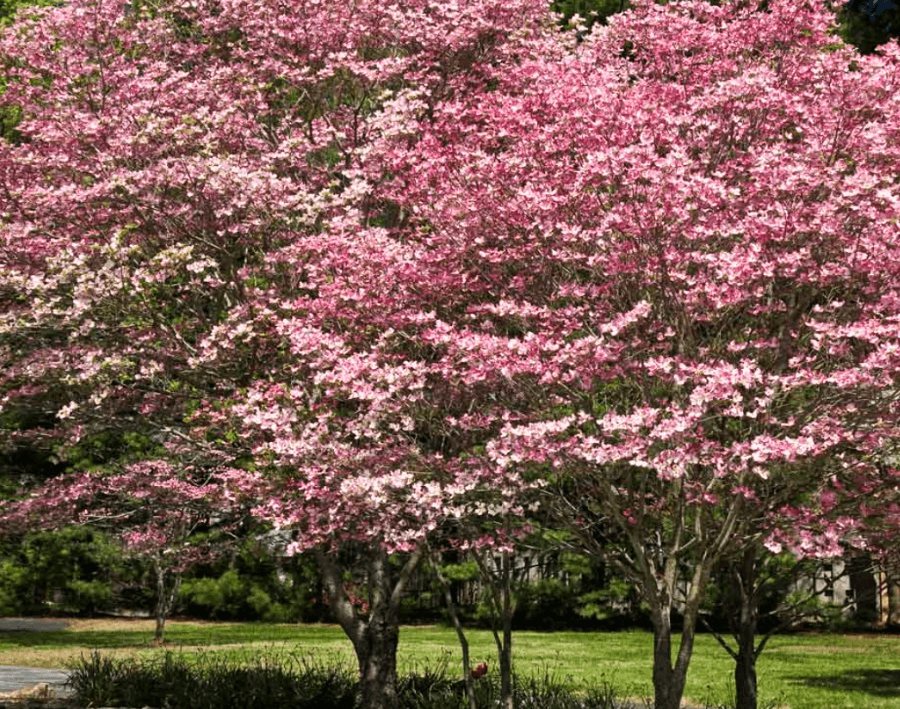
Cherokee Brave Dogwood